
A five-part brief for agent work
Task, purpose, outcome, constraints and verification: a reusable brief for agent work without relying on vague completion claims.
When I give an agent a task involving several steps, I write a five-part brief covering the result I want, the boundaries and how to check it. This reduces guessing, especially when the agent can change files or use external tools.
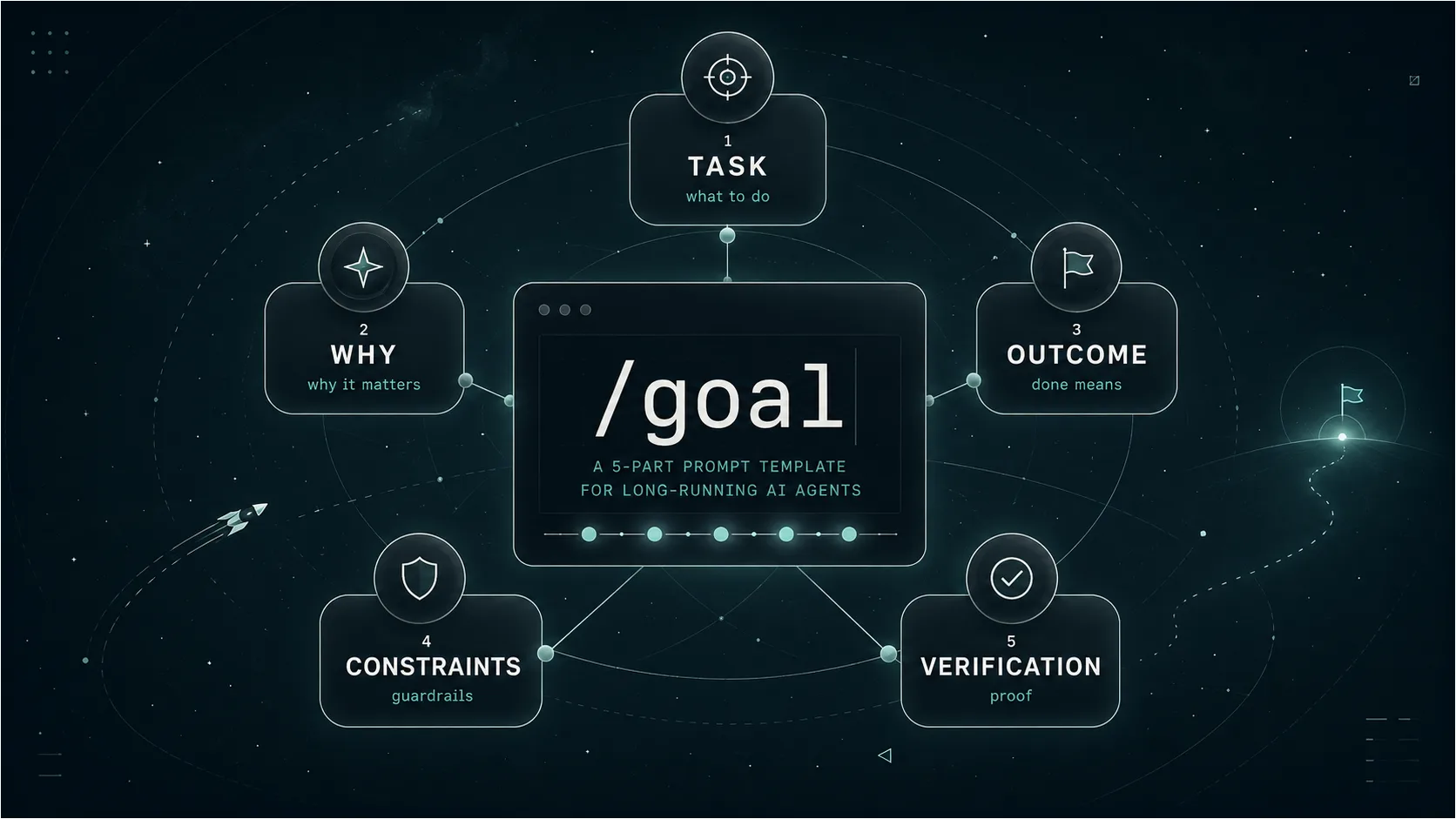
The five-part brief
- Task: the action to take. Name the page, system or files in scope.
- Why: who the work is for and what problem it should solve.
- Outcome: the deliverable, not a vague request to make something better.
- Constraints: what must stay intact, what needs approval and where to stop.
- Verification: the checks and evidence needed before calling it complete.
For example, “improve my website” leaves the audience, scope and publishing authority unstated. “Rewrite the homepage for small-business owners, preserve the services and brand, and return a draft without publishing” gives the agent a narrower job.
A complete example
TASK:
Review the homepage and draft clearer structure and copy.

WHY:
Visitors need to understand what the business offers without knowing the technical terminology.

OUTCOME:
Provide revised headings and copy, with each section tied to a visitor question or next step.

CONSTRAINTS:
Keep the company name, services and factual claims intact.
Do not invent testimonials, metrics or customer outcomes.
Do not modify or publish the live page.
Flag any claim that needs confirmation.

VERIFICATION:
Check that the draft explains the offer and the next step.
Compare the factual claims with the supplied source.
Remove repeated points and unexplained jargon.
List unresolved questions separately from finished work.
Checks depend on the deliverable
A copy draft needs source checks and editorial review. A deployed form needs an actual submission test. An agent saying “done” is not evidence, and a self-awarded score does not replace testing the relevant behaviour.
If the task includes a deployment, specify which environment may change and what proves it works there. If a check cannot run, the agent should report that limit rather than describe the result as verified.
Keep the brief proportional
A small edit may need only a few sentences. Use the full structure when ambiguity or tool access makes mistakes costly. In tools that support a /goal command you may attach the brief to a goal, but that command is not universal and is not required to use the format.
Written constraints guide the agent; permissions and approval controls still need to enforce the important boundaries.